Hardinge lathe rebuilding, HLV-H and Super-Precision
Cavco rebuilds Hardinge toolroom lathes back to their original geometry, the HLV-H most often. Ways reground and scraped, the spindle and its bearings, the saddle, cross slide, compound and tailstock brought back into line with each other, then measured and proved before the machine ships. We know this lathe. Cavco has rebuilt Hardinge toolroom lathes for more than forty years, most of them HLV-Hs, and we know where every one of them wears.
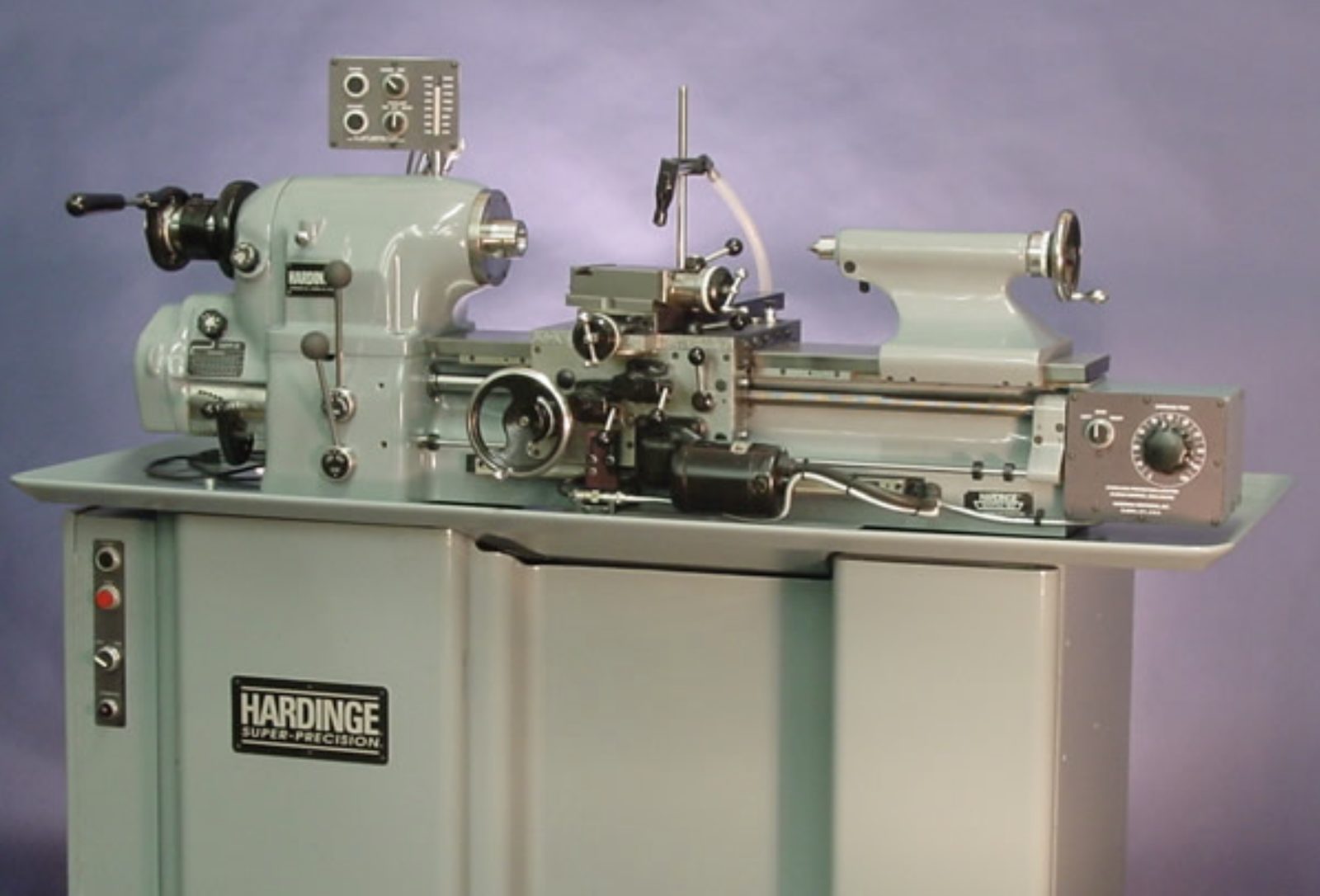
What does a Hardinge rebuild put back?
A Hardinge rebuild puts back six things. The bed and ways, the spindle and its bearings, the saddle, cross slide and compound, the tailstock, the drive and controls, and the fit and finish. A Hardinge loses its accuracy the way every toolroom lathe does, in the ways and the spindle, slowly, while the machine still runs and still looks fine. A rebuild is not a repaint over that. It is the geometry put back and then proved.
Bed and ways
Reground and scraped back to flat and straight, so the saddle runs true along the whole length rather than only where it was worn in.
Spindle and bearings
Runout, heat and noise. The spindle is rebuilt or replaced and set back true to the bed, which is what a collet lathe lives or dies on.
Saddle, cross slide and compound
Gibs, wear strips and leadscrews. Backlash out, the slides realigned to the bed and square to each other.
Tailstock
Brought back on centre with the spindle, in both height and alignment, so the machine turns parallel between centres.
Drive and controls
The variable speed drive, motor and switchgear put right, and obsolete parts substituted where the original is gone.
Fit and finish
Wear parts new, guards and covers refitted, and the machine painted so it looks like what it now is.
Why the Hardinge keeps coming back
The HLV-H was built to hold accuracy that most toolrooms cannot buy new at the same money, and the castings outlast the geometry by decades. That is why a shop with a tired Hardinge is usually better off rebuilding the one it has than replacing it. It is also why no other lathe has come through this shop as often, and why Cavco once ran a site of its own for this work.
HLV-H and HLV toolroom lathes, TFB and the Super-Precision family, second operation machines and chuckers. Alongside them, forty-five years of the Bridgeports, Bullards, Brown & Sharpes and surface grinders that stand next to them in the same tool rooms. If yours is not here, ask.
Questions we get
- The machine comes apart to the bed. Ways are reground and scraped back to flat and straight, the spindle and its bearings are rebuilt or replaced, and the saddle, cross slide, compound and tailstock are brought back into line with the bed and with each other. Wear parts go back in new, the drive and controls are put right, and the machine is measured and run before it ships.
- Usually, and that is why they keep coming back. A Hardinge was built heavy and accurate, so the iron is normally still good when the geometry has gone. A rebuild returns the accuracy the machine was bought for on a base that a new machine at the same money will not match. Where a machine is not worth it, we say so before the work starts.
- The HLV-H most often, and the rest of the toolroom family alongside it, HLV, TFB and the Super-Precision lathes. Second operation machines and chuckers come through too. If yours is not on that list, ask.
- On a Hardinge it usually is. The machine has to come apart to reach the ways and the spindle, and those two are what the accuracy sits on, so putting one back without the other tends to move the problem rather than fix it. We measure before we quote, and we tell you what we find either way.
- At our shop in Connecticut, because the ways go on a grinder. A lathe this size travels easily, which is part of why the rebuild is the job worth doing on a Hardinge. On the bigger machines that cannot travel we grind ways in place instead, with a proprietary process, so the machine never leaves your floor.
- The measurements. We record the geometry the machine went out with, so you have the alignment figures rather than an assurance that it is fine.
Reviewed September 2026 by Cavco Machine Tool Rebuilding, LLC.
Tell us which Hardinge and what it is doing
Call, or send the model and what you are seeing. We answer the same day.